
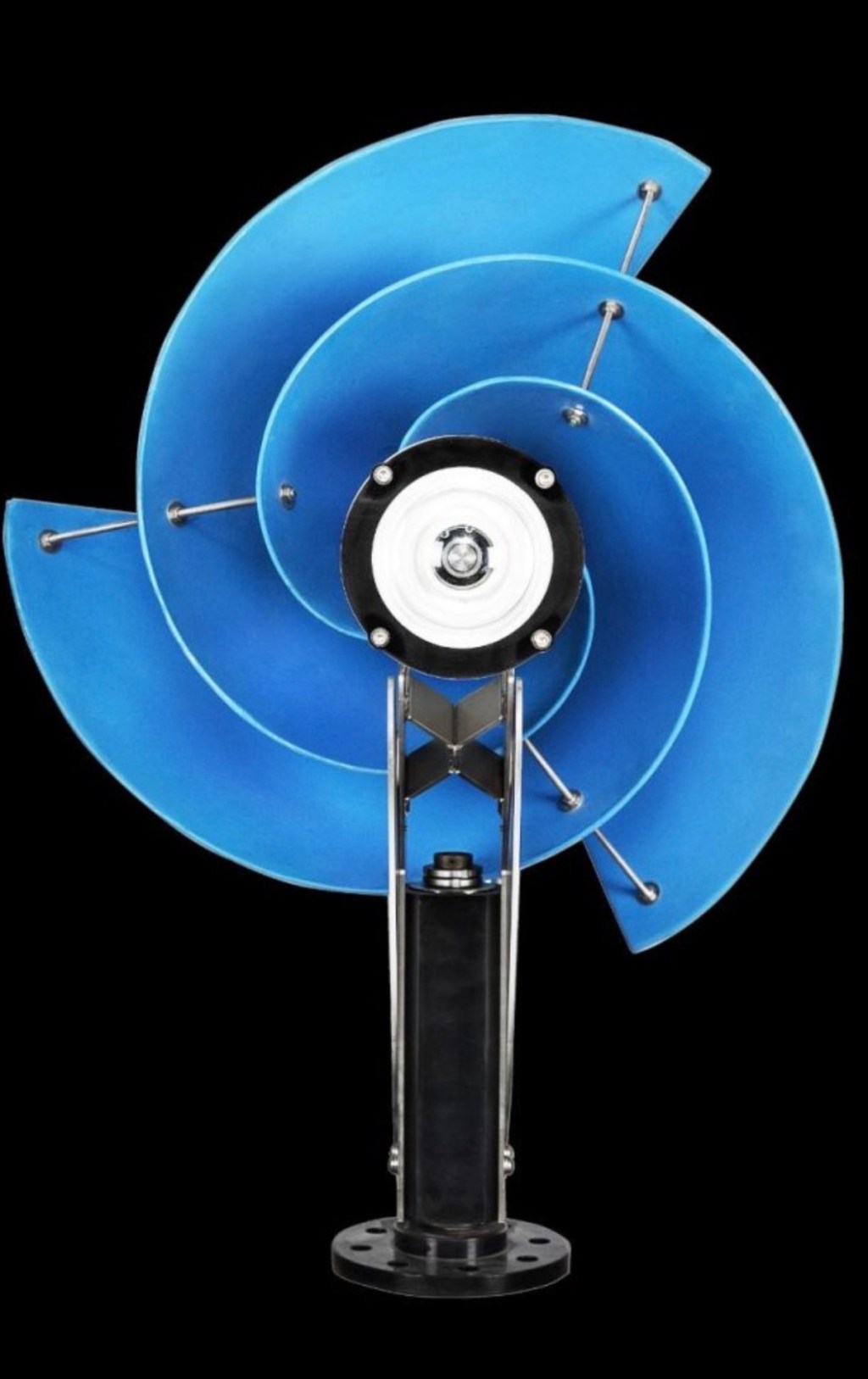
When people see a small wind turbine spinning on a farm, school roof, or community building, it’s often described as cutting-edge renewable technology. The reality is more interesting — and more powerful. Small wind turbines are not a radical new invention. They are simply the latest step in a technological story that began more than two thousand years ago.
Wind power is one of humanity’s oldest energy technologies. What we are doing today is not inventing it. We are refining it.
Understanding this history matters, because it changes how communities should think about wind energy. Instead of seeing it as experimental or futuristic, we should recognise it as a mature, adaptable technology that deserves a place in long-term local planning.
The Ancient Origins of Wind Power
Humans have been capturing wind energy for at least two millennia.
Early vertical-axis windmills appeared in Persia around the 7th century, where they were used to grind grain and pump water in harsh desert environments. These machines were simple but ingenious: walls channelled the wind into rotating sails that powered millstones.
By the medieval period, windmills had spread across Europe. The iconic tower mills and post mills of the Netherlands, England, and France became essential infrastructure. They ground flour, drained wetlands, sawed timber, and powered industry.
For centuries, wind power was not an alternative energy source. It was energy infrastructure.
Continuous Evolution, Not Reinvention
Like many long-lived technologies, wind power has evolved through incremental improvement.
Materials improved from wood and cloth to steel and composites. Mechanical systems were replaced by generators and electronics. Control systems became smarter. Blades became more aerodynamically efficient.
But the core principle has not changed: wind turns blades, blades turn a shaft, and the resulting motion produces useful work.
Modern small wind turbines are simply a refined version of this same idea.
Today’s machines incorporate:
– Advanced aerodynamic blade design
– Lightweight composite materials
– Smart controllers and inverters
– Integration with batteries and microgrids
– Remote monitoring and diagnostics
In other words, they are modernised tools built on an ancient foundation.
Why the “New Technology” Narrative Is Misleading
Framing small wind turbines as “cutting-edge” can unintentionally create hesitation.
New technologies carry perceived risks:
– Will it work reliably?
– Will it become obsolete?
– Is it worth investing in now?
But wind power has already passed the ultimate technology test: time.
A technology that has persisted for two thousand years is not speculative. It is resilient.
Communities did not rely on windmills for centuries because they were fashionable. They relied on them because they worked.
The Return of Distributed Energy
Historically, energy was local.
A village windmill served a local community. A watermill powered nearby industry. Energy systems were distributed, visible, and integrated into daily life.
The industrial age centralised energy production into large power plants and national grids. That model delivered enormous benefits — but it also created dependency on distant infrastructure and fossil fuels.
As communities now transition toward low-carbon systems, we are rediscovering the value of distributed energy.
Small wind turbines fit naturally into this model.
They can be deployed at:
– Farms
– Industrial estates
– Community buildings
– Schools and campuses
– Rural microgrids
When paired with solar, storage, and smart controls, they become part of resilient local energy systems.
Why Communities Should Think Strategically About Wind
Because small wind is not experimental, it should not be treated as an occasional add-on or symbolic project.
Instead, it should be integrated into strategic planning for communities and regions.
This includes thinking about:
1. Local energy resilience
Distributed generation reduces reliance on distant energy supply chains.
2. Land use and infrastructure planning
Wind resources should be mapped and considered alongside housing, transport, and industry.
3. Community ownership models
Locally owned turbines can keep energy revenue within the community.
4. Hybrid renewable systems
Wind complements solar particularly well in many climates, producing energy at different times of day and year.
5. Long-term energy independence
Strategic deployment today can shape community energy systems for decades.
Learning From the Past to Design the Future
Looking back at the long history of wind power offers an important lesson.
The most durable technologies are not the ones that appear suddenly and disappear just as quickly. They are the ones that evolve continuously, adapting to new materials, new needs, and new societies.
Wind power has already proven its staying power.
The small wind turbine on a farm, school, or community building is not a symbol of a futuristic experiment. It is the modern descendant of the same machines that once powered villages across Europe and the Middle East.
In that sense, small wind turbines are not cutting-edge technology.
They are something far more valuable:
a refined, time-tested tool that communities can confidently build into their energy future.
 Blog
Blog 
Leave a comment